How an Electric Fence Works
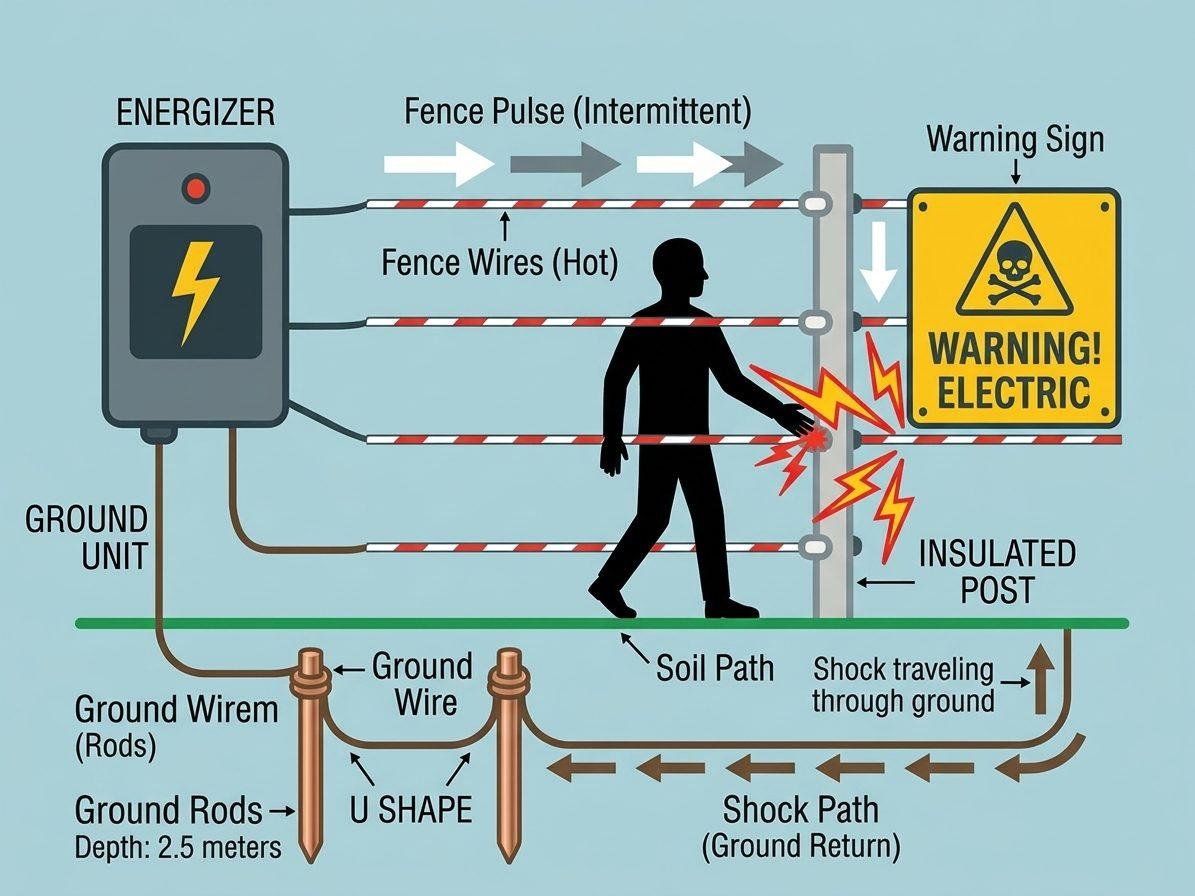
From energizer to earth return: how an electric fence delivers a safe, non-lethal pulse, detects tampering and keeps your perimeter secure.
From Power Source to Pulse
An energizer converts mains or solar power into a high-voltage, low-current pulse released roughly once per second onto the fence wires. Output reaches up to 9.5 kV, but the pulse is brief and limited in energy, which is what makes it safe by design.
Insulation Keeps the Pulse in the Wire
The wires are held on insulators — brackets bolted to a wall top, or strands strung between concreted steel or treated timber poles. Insulation keeps the pulse in the wire and out of the structure, so the whole length of the fence stays live.
What Happens When Someone Touches It
An intruder touching a live wire completes the circuit to ground and receives a sharp but non-lethal shock. The pulse complies with fence-energizer safety standards (IEC 60335-2-76): short duration and limited energy. The shock itself, and the visible warning signage, deter most intrusions before they begin.
Why Earthing Matters
A properly designed earth-return system — multiple galvanised rods bonded together — is what makes the shock effective and the alarm reliable. Poor earthing is the most common reason a new fence underperforms.
Alarms and Monitoring
A voltage drop from a cut or shorted wire is detected by the energizer, which raises an alarm output. That output can drive a siren, a strobe, or a signal to your control room or monitoring service, so a tampered fence triggers a response, not just a shock.
The Main Components
- Wall-top brackets: galvanised steel brackets carry 6–12 high-tensile strands above the wall line, angled inward to resist climbing.
- Free-standing poles: galvanised steel or CCA-treated timber poles form a complete perimeter where no wall exists.
- Certified energizers: mains and solar units sized to the perimeter length and strand count.
- Earthing system: bonded earth rods that complete the circuit.
- Alarm integration: tamper and low-voltage alarms wired to sirens, strobes, CCTV or monitoring.
Power: Mains or Solar
Mains energizers suit sites with reliable grid power. Solar systems — panel, deep-cycle battery and charge controller — keep the fence live through power cuts and in off-grid locations. Hybrid setups use mains as primary and solar as automatic backup.
Ready to secure your property? Request a free site survey or see our full range of services.